
What Happens During Cardiac Ablation and What Is Recovery Like?
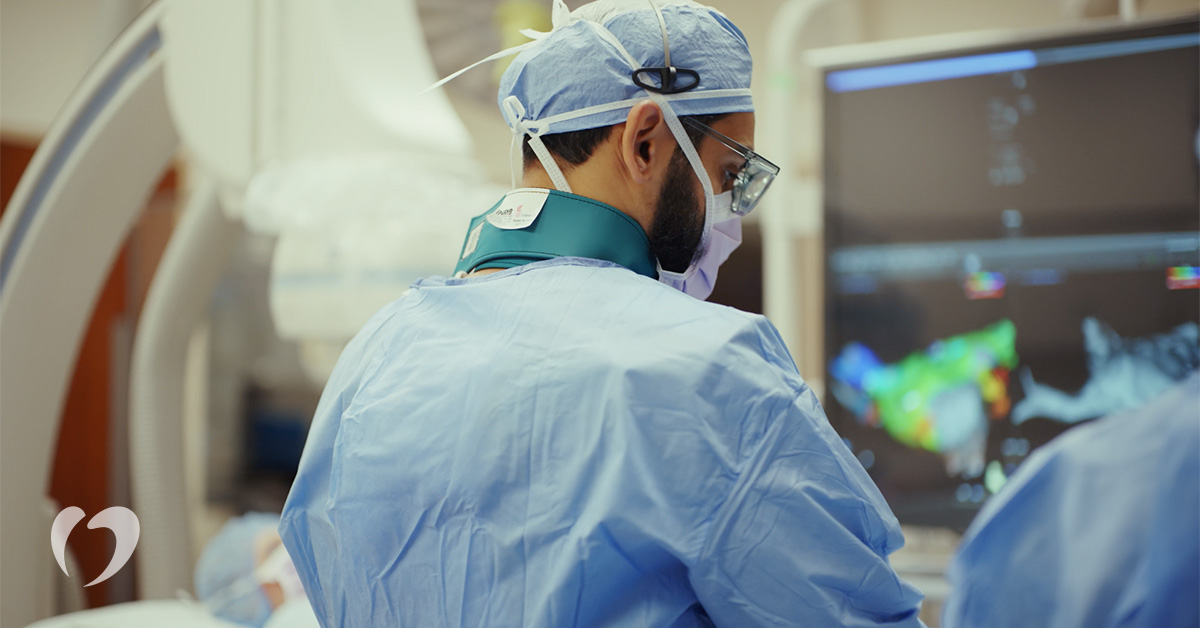
When an abnormal heart rhythm continues despite medication or other treatments, providers may use cardiac ablation to target heart tissue and disrupt its electrical signals.
Ablation is commonly used to treat atrial fibrillation (AFib) and other arrhythmias. Depending on the heart rhythm disorder and the patient’s medical history, providers may perform it through a catheter or as a surgical procedure.
If you are preparing for an ablation, knowing what happens during the procedure and what to expect afterward can help you understand what recovery may look like.
What happens during cardiac ablation?
Catheter ablation is a minimally invasive procedure used to treat arrhythmias. During catheter ablation, thin, flexible tubes called catheters are guided through a blood vessel, typically from the groin, and into the heart.
The catheters allow the physician to pinpoint the source of the abnormal electrical signals causing the arrhythmia. Once the source is located, your provider uses energy — either heat or freezing techniques, depending on the procedure — to create small areas of scar tissue that interrupt those signals.
Procedure length varies depending on the arrhythmia being treated and the complexity of the ablation. Afterward, you will move to a recovery area where staff will monitor your heart rhythm, blood pressure, and catheter insertion site. Some patients go home the same day, while others stay overnight.
How is surgical ablation different?
Some patients with AFib may need a surgical ablation rather than a catheter-based procedure. This is generally considered when other treatments have not adequately controlled the arrhythmia or when the patient is already undergoing heart surgery for another condition.
Oklahoma Heart Hospital performs surgical ablations that include convergent ablation and the Cox-Maze procedure. Because these procedures require surgical access to the heart, recovery takes longer than it does after catheter ablation.
What should you expect immediately after catheter ablation?
Once the catheters are removed, you may need to remain lying down for several hours while the insertion site begins to heal and your care team continues monitoring your heart.
Soreness or bruising around the catheter insertion site is common during the first few days, and some patients also experience fatigue or mild chest discomfort after an ablation. Before you leave the hospital, your care team will provide instructions for caring for the insertion site, taking medications, and returning to normal activities.
What is the first week of recovery like?
Most patients recover fairly quickly from the catheter procedure itself. Daily activities can typically resume within a few days, although strenuous activity and heavy lifting are generally restricted for about a week. Your physician will tell you when it is appropriate to return to work, exercise, and driving based on your procedure and overall health.
The catheter insertion site may remain tender or bruised while it heals. Your care team will provide instructions for caring for the area during recovery.
What happens in the weeks and months after an ablation?
In the weeks after an ablation, the heart tissue continues to heal. Some patients may notice occasional palpitations or changes in their heart rhythm during this time.
Follow-up care allows your provider to monitor your heart rhythm, discuss any symptoms you have experienced, and see how you are progressing after the procedure.
Over the next few months, your provider can better assess how well the ablation is controlling your arrhythmia. Many patients experience improved symptoms, although some may continue to have rhythm problems or need additional treatment.
Take the next step in your heart rhythm care
Recovery after cardiac ablation varies from patient to patient. Your care team will provide guidance based on your procedure, overall health, and how your recovery progresses.
If you have questions about cardiac ablation or treatment for an abnormal heart rhythm, the specialists at the Oklahoma Heart Hospital Heart Rhythm Institute can help you understand your options and what to expect throughout treatment and recovery.
Contact our team to learn more or schedule an appointment.