
What to Know About Irregular Rhythm Notifications from Your Apple Watch
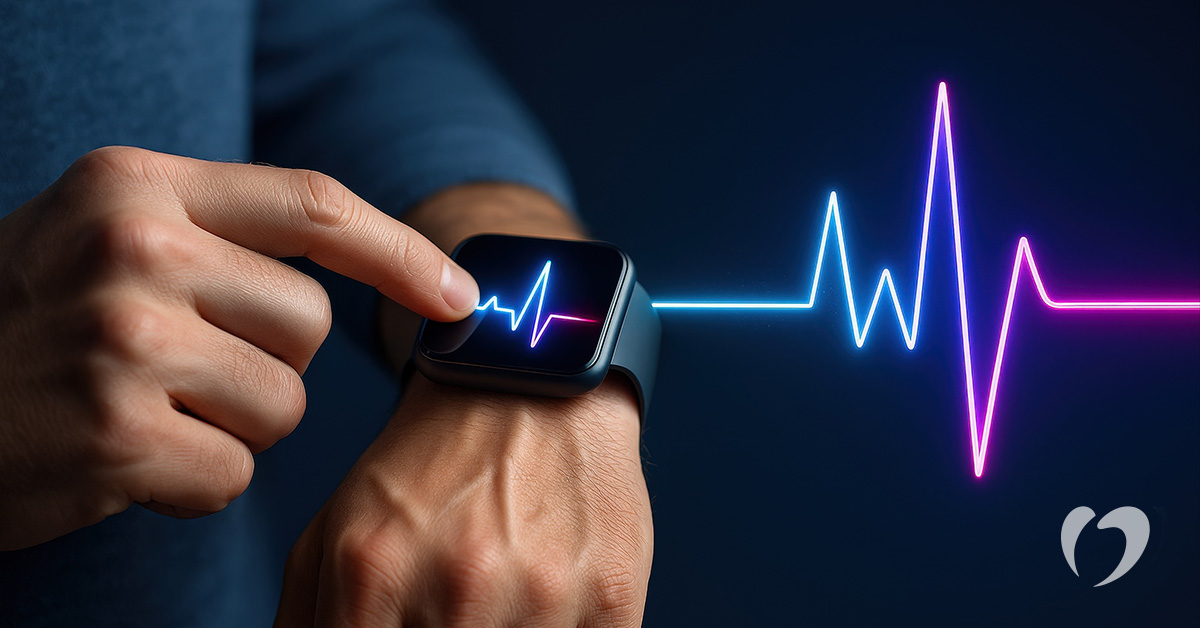
In today’s world of wearable technology, many people use smartwatches to track daily activity, sleep, and other health data. For some Apple Watch users, that can also include heart health notifications alerting you to high or low heart rates and irregular heart rhythms that may suggest atrial fibrillation (AFib).
Receiving an irregular rhythm notification can feel alarming, particularly if you have never noticed heart rhythm symptoms before. While these notifications are not usually emergencies, they can signal important issues and should not be ignored.
What can an irregular rhythm notification mean?
The Apple Watch can be set to check your heart rate for irregular rhythms occasionally. If the watch detects an irregular rhythm through multiple readings, you can receive a notification.
An irregular rhythm notification does not mean the watch has diagnosed AFib, but it has identified a rhythm pattern that should be evaluated further by a healthcare provider.
It is important to note that Apple Watch is not constantly checking for AFib and may not detect every irregular rhythm episode. The notifications are not designed for individuals who are already diagnosed with AFib. In some cases, notifications may also be related to rhythm changes other than AFib.
What should you do if you receive a notification?
If you receive an irregular rhythm notification from your Apple Watch, do not panic.
First, pay attention to and document any symptoms you may be experiencing. Some people with AFib notice symptoms such as a racing heartbeat, fluttering in the chest, dizziness, fatigue, or shortness of breath. Others may have very mild symptoms or no symptoms at all.
Next, schedule an appointment with your primary care provider or cardiologist. If possible, save the notification or data from your watch to give them before or during your visit.
Symptoms such as chest pain, fainting, severe shortness of breath, or pressure in the chest should always be treated as an emergency.
Why follow-up matters after an irregular rhythm notification
Wearable devices like the Apple Watch have become increasingly helpful in early identification of possible heart rhythm changes. An irregular rhythm notification may be the first sign that further evaluation is needed.
A recent study published in the Journal of the American College of Cardiology found smartwatch monitoring helped identify more new AFib cases than standard care alone, including in many patients who did not notice symptoms before diagnosis.
Irregular rhythm notifications are only a starting point and should always be followed by proper medical evaluation. Your provider may recommend additional testing, such as an electrocardiogram (ECG) or heart monitor, to determine whether AFib or another heart rhythm condition is present.
Taking the next step after an irregular rhythm notification
At the Heart Rhythm Institute at Oklahoma Heart Hospital, our team specializes in evaluating and treating AFib and other heart rhythm conditions. We can help determine whether additional testing or treatment is needed and guide you through the next steps in your care.
If you have received an irregular rhythm notification from your Apple Watch or have concerns about changes in your heart rhythm, contact the Heart Rhythm Institute to schedule an evaluation.