The Journal Record (Oklahoma City, OK)
April 11, 2007 Wednesday
Oklahoma Heart Hospital credits rapid growth to
focus on customer service
Staci Elder Hensley
As a pastor for more than 30 years, the Rev. Drue Freeman has been inside every medical facility in the Greater Oklahoma City area more times than he can count. Yet when he began having chest pains in 2005, there was only one hospital he considered entering.
"Two years ago, when I had a heart attack, I went immediately to the Oklahoma Heart Hospital," Freeman said. "I have known and visited many people who had been there since it opened, and the doctors and staff there always go the extra mile, not only to efficiently care for their patients, but also to keep them completely informed about the various procedures and treatments they are undergoing, and their level of progress. "
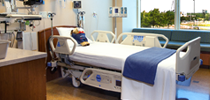
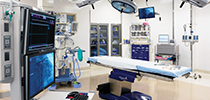
Freeman's high opinion is shared by others treated at OHH, as reflected in the four-year-old hospital's consistent 99-percent patient satisfaction rate. Believed to be the nation's first all-digital hospital, it is the brainchild of Oklahoma Cardiovascular Associates, Oklahoma's largest group of practicing cardiologists. Their outline for the hospital included advances such as faster patient processing, state-of-the-art treatments, more nurses, less moving of patients from room to room, a paperless record system, and an atmosphere that focused on the patient's needs and comfort.
The hospital, adjacent to Mercy Health Center in far north Oklahoma City, has consistently ranked in the nation's top 1 percent in patient satisfaction since opening in fall of 2002. The rankings are established by Press Ganey Associates Inc., a health care satisfaction measurement and improvement firm, based on patient surveys. Press Ganey ranks 1,800 hospitals nationally, including 39 in Oklahoma. Only one other Oklahoma hospital ranked in the top 3 percent nationally; the remaining 37 were in the 70s or below.
The business has been so successful that plans are under way to build a second heart hospital on 25 acres near Interstate 240 and Sooner Road. At the same time, a $25 million expansion project will add 70,000 square feet to the original 240,000-square-foot hospital. Planned are an additional 21 beds, a larger emergency room, meeting space and clinical space for OCA doctors.
"This is an extraordinary achievement, and puts us among the best of the best," said Dr. John Harvey, CEO of the Oklahoma Heart Hospital and cardiologist with Oklahoma Cardiovascular Associates. "Physicians can refer their patients to the Oklahoma Heart Hospital with the utmost confidence they will receive attentive and responsive care second to none anywhere in the United States. "
The hospital's growth rate has been a steady 10 percent per year. The staff performs approximately 1,200 open heart surgeries, 1,000 peripheral vascular surgeries, 2,500 catheter-based interventions, 600 pacemaker installations and 400 defibrillator procedures annually. Patients are accepted for treatment regardless of their insurance status or their ability to pay.
"While there are many factors in any success story, I think the patient satisfaction, which has been in the 99th percentile every week since we opened, is most responsible for the growth," Harvey said. "We believe that we have set a new paradigm for patient care; one that puts what is best for the patient at the center of all decisions, be it nurse staffing ratios, building design, paperless electronic hospital records, food services, open visitation hours, etc. We feel that once a patient has been cared for at our hospital, that they will never want to go anyplace else. "
Patients have an average wait of only 90 minutes from arrival at the emergency room to surgery 25 percent less than the national average of more than two hours. The hospital provides portable heart monitors that travel room to room with the patient, continuously tracking their blood pressure and heart rate, but not restricting mobility.
The hospital also boasts a maximum of four patients to one nurse. It's not uncommon to find a much higher ratio nationally at most health care facilities, Harvey said. In addition, Oklahoma Heart Hospital has 1-to-2 and 1-to-1 nurse-to-patient ratios in the critical care unit and 1-to-1 for heart recovery.
A 1-to-4 nurse-to-patient ratio is the standard of excellence set by the American Nursing Association, said Cindy Miller, RN, OHH's research and development director.
"When a hospital has a 1-to-5 ratio or anything above, you start seeing medication errors, patient falls and infection rates rise," she said. "What we provide at OHH is very rare. "
Harvey's and Miller's claims are backed by several studies profiled in The Journal of the American Medical Association and Health Affairs. Hospitals could avoid 6,700 deaths per year by increasing the number of RNs directly attending patients, according to one study; another found that a surgical patient's overall risk of death rose 7 percent for each additional patient above four added to a nurse's workload. Further, a 2002 Joint Commission on the Accreditation of HealthCare Organizations study found that nursing shortages contribute to nearly a quarter of all unexpected incidents that kill or injure hospitalized patients.
When it comes to nursing care, Oklahoma Heart Hospital has the highest nursing scores reported nationwide, according to Press Ganey Associates Inc. It is also among the nation's leaders in everything from physician scores to patients' satisfaction with the rooms, including room cleanliness, noise level and room décor.
All OHH inpatients receive a survey.
"What our patients think makes a difference to us," Miller said. "We look at every survey to see what our patients are telling us. It drives how we serve them, and we make immediate changes. "
As one example, the hospital responded to patient feedback by instituting the Needle Stick Hotline to ensure patients receive as few needle sticks as possible.
"Sometimes it's difficult to find a suitable vein, and patients have to put up with a lot of sticks as nurses try to place an IV or draw blood," Miller said. "When we have a patient at OHH whose veins might be difficult to locate, we have a team of people who are highly skilled at IV placement and are on-call at any time to provide assistance. "
Steps like the hotline ensure better care, Harvey said. "Being patient-focused is our mission, and meeting patients' needs means being creative with solutions to their problems. Our focus is the very reason we are leading the nation in patient satisfaction. "
"I can't say enough about how I was treated," said heart patient Lisa Sykes. "We went there because I had a heart scan and other tests done, and my husband wouldn't go anyplace else. The thing that impressed me the most was how quickly they did the tests and got the results back. I was out of there in just a few hours, yet I felt very calm about the situation. Everyone took the time to explain what tests they were doing and why, which takes a lot of the anxiety out of the experience. "
Freeman agreed.
"The Oklahoma Heart Hospital is without question the best hospital I have been around," he said. "Others should find out how they do things and copy them. "
Oklahoma Heart Hospital expanding into south OKC
Building on the overwhelming success of the original, a second Oklahoma Heart Hospital is planned on 25 acres near I-240 and Sooner Road. The two-story, $75 million facility will serve doctors and patients in south and southeast Oklahoma City and beyond. Its amenities will include:
* Sixty-two in-patient beds.
* Two operating rooms.
* Three heart catheter labs.
* A 12-bed emergency room.
* A 16-bed day patient unit.
* Use of the same all-digital computerized system now in place at the Oklahoma Heart Hospital.
Architectural plans are in development for the new hospital. Groundbreaking is scheduled for this fall, and construction should take an estimated 20 to 24 months. Investors include Mercy Health System, the Oklahoma Cardiovascular Associates and numerous physicians in private practice. Other hospitals have been invited to invest as well; but no agreements have yet been signed, according to Dr. John Harvey, Oklahoma Heart Hospital CEO.
"We are extremely excited about this project," Harvey said. "It's our chance to continue and extend the high level of care that the Oklahoma Heart Hospital is known for. "
Posted on
Thu, May 3, 2007
by Tristan Shutt